The New Enclosure: Green Colonialism and the Pastoralist Frontier
The “Green Transition” is often marketed as a sleek, tech-driven pivot toward a sustainable future. But in the rangelands of Northern Kenya and across the Global South, it looks less like progress and more like a familiar ghost: the Plantationocene.
As we race to “decarbonize,” we are witnessing a contestation over real and imagined values. On one side is the reverence for nature found in pastoralist logic; on the other is the slavery of nature inherent in Western capitalism. Below the surface of carbon credits and wind farms lies a troubling reality of carbon colonialism and the rise of “shadow states.”
1. The False Equivalence: Biogenic vs. Fossil Carbon
The fundamental logic of carbon offsetting is built on a scientific and ethical fallacy. To justify continued fossil fuel extraction, corporations use rangelands as “sinks.” However, the physics don’t align.
- Fossil Carbon: Carbon that has been locked away for millions of years, suddenly thrust into the atmosphere.
- Biogenic Carbon: Carbon that is part of the active, short-term atmospheric cycle (grasses, soil, livestock).
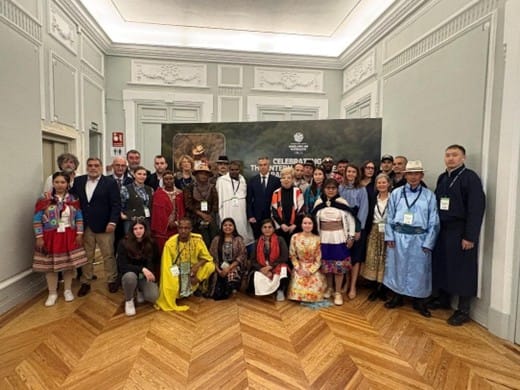
Using the biogenic carbon of a pastoralist’s grazing land to “cancel out” the fossil carbon of a multinational airline is like trying to pay off a permanent debt with a temporary loan. It creates a mirage of climate action while allowing the actual polluters to continue their behavior. This is evident in the recent policy paper developed by the IYRP working group on carbon markets, outgrowing offsetting.
2. Carbon Colonialism and the “Shadow State”
The Northern Kenya landscape is characterized by insecure land tenure, meagre infrastructure, and harsh terrains. Into this “void” steps investors and scammers in the name of green investments and conservation organizations. While framed as conservation, these organizations often function as a shadow state, exercising territorial control that bypasses traditional communal governance.
The Problem of “Additionality”
To make carbon projects profitable, there is a perverse financial incentive to label rangelands as “degraded.” By claiming the land is dying, “experts” from the West can justify interventions like centrally controlled rotational grazing that ignore centuries of indigenous knowledge. This is the Plantationocene in action - replacing decentralized, adaptive pastoralism with rigid, top-down colonial models.
3. The Downward Displacement of Responsibility
The Green Transition is currently modeled on an economy of lack.
- The Burden: Mitigation pressure is passed down from the billionaire class and powerful states to the communities with the least power to resist.
- The Irony of LTWP: Look no further than the Lake Turkana Wind Power (LTWP) project. It generates over 310 MW of clean energy for the national grid, yet Marsabit town remains largely dependent on diesel-powered generators. The “green” energy flows over the heads of the locals to power the capital, while they inherit the displacement and the noise.
Key Question: If the transition is “green,” why does it feel like the same old extraction? Who compensates for the foregone development and the lost community benefits?
4. Beyond FPIC: From Checklists to Agency
Free, Prior, and Informed Consent (FPIC) has been reduced to a bureaucratic checklist. It is a tool of the market, designed by the market. The standards, the verification, and the “science” are all Western-driven.
The ecology of the poor is being commodified. Intangible rights the spiritual and cultural contributions of pastoralism to the earth’s health remain unrecorded and uncompensated. Instead, land is monetized, carving up communal heritage into private parcels that are easier for capital to control.
5. Communities as Participants
We also must be honest:, communities are not always just victims. At times, they become perpetrators of capitalism, lured by the promise of “alternatives” to pastoralism. Carbon trading is often sold as a replacement for the pastoralist way of life, rather than a tool to strengthen it. This is a trap. When we commodify the land, we lose the very essence of the “reverence” that kept these ecosystems viable for millennia.
The Path Forward: Compensation, Not Offsetting
If we are to avoid the mistakes of previous energy transitions, we must shift the paradigm:
- Stop Offsetting - Climate finance should not be an “offset” for someone else’s sin. It should be an instrument of compensation for the “foregone progress” of communities who have protected these lands. You can’t dirty your house and expect someone else to be throwing out your filthy dirt.
- Strengthen, Don’t Reshape - Finance should allow pastoralists to practice pastoralism better, providing social amenities and security without demanding they abandon their decentralized mobility.
- Recognize Biogenic Integrity: Stop equating soil carbon with coal.
The Anthropocene shouldn’t mean the end of the pastoralist ecosystem. We must resist a transition that treats the rangelands as a “field for offsetting” and instead see them as the front line of a truly just and sustainable survival.